Tampilkan postingan dengan label marine life. Tampilkan semua postingan

Senin, 12 Desember 2011

OCTOPUS KAMA SUTRA


Combine weightlessness while swimming with 16 limbs and squishy bodies and the mating possibilities get really interesting. H/T Deep Sea News.

Mimic octopus. Credit: Bernd via Wikimedia Commons.

Jumat, 18 November 2011

TIDEPOOL CURIOSITIES

Keyhole limpet. Credit: skome via Flickr.
Bubbles left at tidepools after waves retreat. Credit: Mila Zinkova via Wikimedia Commons.

Sparring sea anemones, white tentacles are fighting tentacles. Credit: Mila Zinkova via Wikimedia Commons.

The curio cabinet of a tidepool, with starfish, anemones, sea urchins, marine algae, barnacles, and hermit crabs. Credit: summersumz via Flickr.

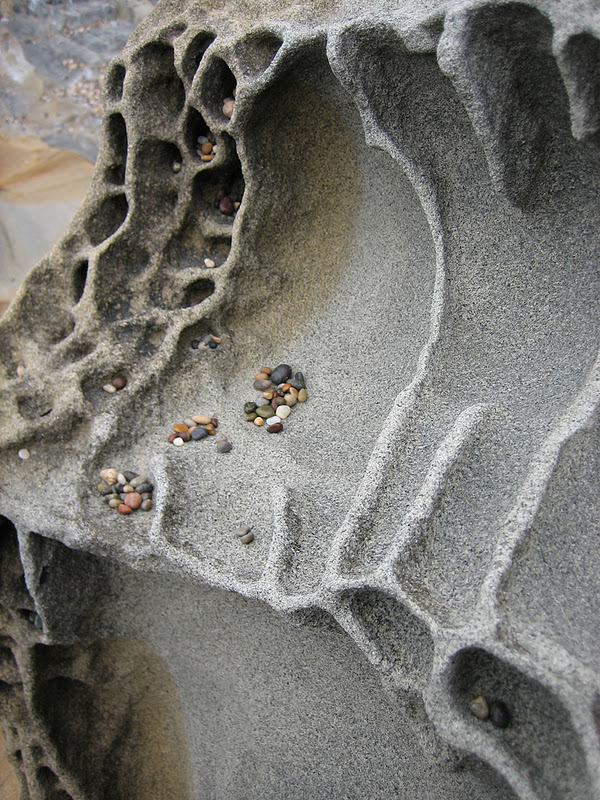
Tidepool architecture. Credit: 4johnny5 via Flickr.

Artificial tidepool. Credit: Johnny Grim via Flickr.

Natural tidepool. Credit: bikehikedive (nugun) via Flickr.

Sea star growing new legs. Credit: Mila Zinkova via Wikimedia Commons.

Sea anemone, Anthopleura sola, eating a by-the-wind-sailor, Velella velella, carried to shore on spring winds. Credit: Mila Zinkova via Wikimedia Commons.

Octopus in tidepool. Credit: Mila Zinkova via Wikimedia Commons.

Microcosmos. Credit: Avenue via Wikimedia Commons.

Highrises. Credit:Glen Bowman via Wikimedia Commons.

Sea star eating a mussel. Credit: Mila Zinkova via Wikimedia Commons.

Brooding sea anemone, Epiactis prolifera. Numerous young in different stages of development are visible on the pedal disk. The brooding anemone is a colonial hermaphrodite that fertilizes and incubates its eggs in its own digestive cavity. After hatching, the larvae swim out of the mouth and migrate to the disk, installing themselves on the outside until they're big enough to move on and feed themselves. Credit: Mila Zinkova via Wikimedia Commons.

Nudibranch, Acanthodoris lutea, laying eggs in tidepool. Credit: Mila Zinkova via Wikimedia Commons.

Psychedelic nature: flame-lined chiton. Credit: Mila Zinkova via Wikimedia Commons.

Ocean vegetables. Credit: bastasia via Flickr.

Curiosities observed. Credit: nashworld via Flickr.

Senin, 14 November 2011

KILLER WHALES V. SALMON

Credit: Robert Pittman, NOAA.

What happens when we 'manage' two species in the wild with different�and conflicting�objectives? 

And what happens when one eats the other�and so do we?

That's the question raised in an interesting new paper in PLoS ONE. The authors investigated how many endangered chinook salmon are needed by endangered killer whales to recover their numbers in the northeastern Pacific.

Salish Sea, comprising the Strait of Georgia, Strait of Juan de Fuca, and Puget Sound, surrounding Vancouver Island and Washington state. Credit: SeaWiFS Project,NASA/Goddard Space Flight Center, and ORBIMAGE.

The question gets even more intriguing when you have two countries�Canada and the US�managing the fate of the two species that blithely cross international boundaries as if, you know, they weren't there.

The killer whales in the middle of the conflicted question are known as the southern resident killer whales (SRKW), who summer in the Salish Sea. They eat only fish, and are so dependent on chinook salmon that when they can't get them more adult whales die and fewer calves are born. 

  • Current population of southern resident killer whales: 87 individuals
  • Current chinook salmon stock: 36% of historical run in Canada, 8% in US

Chinook salmon. Credit: Josh Larios via Wikimedia Commons.

The stated objective of US management is to grow the dwindling killer whale population by 2.3% per year over 28 years. 

The authors assessed what the minimum basic caloric requirements were likely to be to make that come true�based on food requirements of captive killer whales, and body lengths of wild whales.

Estimated prey requirements of wild killer whales, based on two plausible values for calorie content of a typical, 4-year-old Chinook salmon. Credit: Rob Williems, et al. PLoS ONE. DOI:10.1371/journal.pone.0026738.

What they found suggests that the chinook salmon can't support both a growing killer whale population and human fisheries at current levels.

What's a fish-eating primate to do? The authors' suggest:

When one protected species relies almost exclusively on another protected species, it can be difficult to develop management frameworks that meet the needs of both species. This can lead to a perception that the needs of the more charismatic species will unfairly trump those of the prey species. In our experience, genuine conservation conflicts often result in management inaction in the absence of a framework in which to assess likely impacts... It is faster to reduce takes of salmon than to increase salmon production, and it is faster to increase salmon production than promote population growth in killer whales. The efficacy of salmon habitat restoration actions can often be measured within a decade, whereas similar measurements will take decades in studies of long-lived species like killer whales.


In other words, maybe we should let the whales get the fish for a while.

There's a lot more interesting stuff going on in this forward-looking paper and luckily it's open access. So you can freely read deeper.

The paper:
  • Williams R, Krko�ek M, Ashe E, Branch TA, Clark S, et al. 2011Competing Conservation Objectives for Predators and Prey: Estimating Killer Whale Prey Requirements for Chinook Salmon.PLoS ONE 6(11):e26738. DOI:10.1371/journal.pone.0026738

Selasa, 08 November 2011

HAIR O' THE SEAL

Antarctic fur seal (right), Weddell seal (left), Penguin Island, South Shetland Islands, Antarctica. Credit: � Julia Whitty.
   
How do you assess the health of a marine invertebrate�namely Antarctic krill�when there's no historical baseline to measure it against? 

In an intriguing piece of detective work reported in PLoS ONE a team of researchers from China and the US turned to analyzing old seal hairs to determine changes in abundance of krill in the past century.

Antarctic krill. Credit: Uwe Kils via Wikimedia Commons.

Antarctic krill, Euphausia superba, is a keystone species in the Southern Ocean and the primary consumer in a foodweb supporting fish, penguins, seabirds, seals, and whales. 

They school in swarms of up to of 30,000 individuals per cubic meter and are perhaps the most abundant animal on Earth, with a total biomass estimated at ~379 million metric tons.

In the video below (starting at 00:01), you can see humpback whales bubble feeding on krill in Antarctic waters.
 

There's evidence of a decline in krill biomass in parts of Antarctica in the past 30 years�but when did it begin?

To look deeper into history, the authors analyzed core samples from lake sediments near an Antarctic fur seal colony on King George Island in the South Shetland Islands off the Antarctic Peninsula.They dated the fur in the cores via stable carbon (d13C) in the samples. They inferred the abundance of krill in the seals' diet via the nitrogen (d15N) isotopes in the fur. From the paper:

Since Antarctic fur seals feed preferentially on krill, the variation of [nitrogen] in seal hair indicates a change in the proportion of krill in the seal's diets and thus the krill availability in local seawater.
  
Antarctic krill grazing on algae living on the underside of sea ice. Credit: Uwe Kils via Wikimedia Commons.
  
Their results indicate that krill began to decline in the diet of fur seals in this part of Antarctica nearly a century ago. That time frame correlates with increasing sea surface temperatures and dwindling sea ice. (See my post Life Inside the Sea Ice more about the relationship between krill and sea ice.) 

From the PLoS ONE paper:

In this region for the past decades, the sea ice shows a decline trend, and this is in coincidence with the decline trend in krill populations. Like the seal [nitrogen] values, the sea surface temperature anomaly in Southern Ocean (50�S) also shows an obvious increasing trend for the 20th century, and the significant correlation between them... suggests that the inferred decreasing krill population is linked with warming ocean and declining sea ice extent.


The paper: 

  • Huang T, Sun L, Stark J, Wang Y, Cheng Z, et al.Relative Changes in Krill Abundance Inferred from Antarctic Fur Seal.PLoS ONE. 2011.DOI:10.1371/journal.pone.0027331.

    Jumat, 04 November 2011

    OCCUPY VERTEBRATES!

    Credit: Kara Treibergs and Laurel Hiebert for the Oregon Institute of Marine Biology, via Pharyngula.

    Selasa, 25 Oktober 2011

    THE SECRET LIFE OF TSUNAMI DEBRIS

    Portions of houses and an overturned boat afloat in the Pacific after the 11 Mar 2011 earthquake and tsunami off Japan. Credit: US Navy/ Specialist 3rd Class Alexander Tidd.

    The International Pacific Research Center (IPRC) in Hawaii reports that somewhere between 5 and 20 million tons of tsunami debris from the March earthquake and tsunami in Japan is migrating quickly across the Pacific Ocean.

    Crew from the Russian tall ship STS Pallada spotted furniture, appliances, and a fishing boat with the home port 'Fukushima' painted on it after passing the Midway islands�part of the Hawaiian Islands Archipelago�last month. That's 2,000 miles from the epicenter of the quake. 

    This is the first confirmed sighting since shortly after the disaster, when the massive floating remnants of coastal Japanese towns�more than 200,000 buildings�simply disappeared from view.


    The image above shows the likely path of tsunami debris as of 25 Oct 2011.

    The IPRC research suggests this path based on 678,305 tracers released from the northeast coast of Japan beginning 11 March 2011�the same day as the quake. 

    You can watch an animation of the full dispersal here. The fluid dynamics are beautiful.


    This video shows the IPRC prediction of the long-term�5-year-plus�travels of the tsunami debris. The original animation for the statistical model is here.

    As you can see from the video, the debris, after bouncing off the west coast of North America, is likely to get trapped in the North Pacific Gyre�along with all the other garbage collecting there. The plastics will last close to forever. 

    As an interesting aside, monstrously huge rafts of tsunami debris may well be one of the mechanisms by which life originally dispersed to the Hawaiian Islands. 

    Pallus' rosefinch, Carpodacus roseus, native to China, Japan, the Korean Peninsula, Kazakhstan, Mongolia, and Russia. Credit: M. Nishimura via Wikimedia Commons.


    A new analysis of the genome of Hawaiian honeycreepers reveals they're not descended, as thought, from the honeycreepers of the Americas, but are instead a sister taxon to the Eurasian rosefinches of the genus Carpodacus.

    Based on a genetic analysis, the precursors of Hawaiian honeycreepers probably arrived on Kauai and Niihau about 5.7 million years ago and continued to diverge into different species after Oahu emerged from the sea.

    ?I?iwi, or scarlet Hawaiian honeycreeper, Vestiaria coccinea. Credit: Paul Banko, NPS.
     
    It's possible that huge floating mats of tsunami debris�perhaps from Japan�brought the ancestors of Hawaii's present-day honeycreepers to the islands.

    Those of you who've spent time at sea know how land birds get blown off course and will rest on any platform on the water�ship, boat, raft, the backs of sleeping whales�as they fight to stay alive.

    Maybe the current tsunami debris will transport some newcomers to the Hawaiian Islands.

    Townsend's warbler rests on a boat. Credit: Andrew Revkin via Flickr.


    If so, would we recognize them as naturally-delivered refugees? 

    Or would we try to exterminate them as human-introduced aliens?

    The papers:

    • Nikolai Maximenko and Jan Hafner. Marine Debris. pdf.
    • Heather R.L. Lerner, Matthias Meyer, Helen F. James, Michael Hofreiter, and Robert C. Fleischer. Multilocus Resolution of Phylogeny and Timescale in the Extant Adaptive Radiation of Hawaiian Honeycreepers. DOI:10.1016/j.cub.2011.09.039.

    Kamis, 20 Oktober 2011

    TWICE AS MANY DOLPHINS, WHALES STILL DYING IN GULF

    Stranded spinner dolphin. Credit: qnr via Flickr.
      
    The latest NOAA report on unusual strandings of whales and dolphins in the northern Gulf of Mexico finds they're still dying at twice the normal rate 18 months after BP's Deepwater Horizon disaster.

    Map of strandings in relation to Deepwater Horizon well. Click for larger version. Credit: NOAA.


    As you can see in the map above, the most heavily oiled shoreline still corresponds with the most dead whales and dolphins.

    Bottlenose dolphins are shown as circles and other species as squares. Premature, stillborn, or neonatal bottlenose dolphins (with actual or estimated lengths of less than 115 cm/45 inches) are shown as a circle with a black dot inside. 

    Pink points mark the most recent week of data. Green points mark are all other cases since 1 January 2011.
     
    All stranded cetaceans (dolphins and whales) from Franklin County, FL to the Texas/ Louisiana border. Credit: NOAA.

    Here you can see how the numbers of strandings have not yet stabilized or even begun to decline. In some cases they're still growing. 

    The magenta-colored bars mark strandings per month in the year 2010. The ivory-colored bars mark strandings per month so far this year.

    Credit: NOAA.

    This graph shows stranded premature, stillborn, or neonatal bottlenose dolphins.

    In my Mother Jones article The BP Cover-Up last year, I wrote about the kind of long-term problems the Gulf might face not just from oil but from extreme quantities of oil in very deep water, as well as from chemical dispersant, including dispersant injected into very deep water.

    Sadly, it seems that cetaceans�past, present, and future�may be bearing some of those burdens.

    Beached sperm whale. Credit: Rachel Denny Clow, Corpus Christi Caller-Times/AP.


    You might be interested in these other posts describing other scientific findings in the wake of last year's Gulf catastrophe:

    Selasa, 18 Oktober 2011

    THE CORAL FOREST


    Another beautiful short film from Morphologic Studios, shot at an underwater nursery for staghorn coral. This critically endangered species has lost 80 to 98 percent of its population throughout the Caribbean in the past 30 years, much of that from climate-change-induced coral disease and coral bleaching.  

    The nursery featured here highlights some intense human efforts to reverse that decline. From the Morphologic Blog:

    One of the most innovative, practical, and functional coral nurseries on the planet can be found just a few miles off the shores of Key Largo. The nursery consists of thousands of neatly organized colonies of the critically important staghorn coral (Acropora cervicornis) grown by the Coral Restoration Foundation (CRF) for the purpose of transplantation back to the reef. Staghorn corals have been decimated by disease and extreme weather here in Florida over the past 30 years, resulting in a seriously degraded reef ecosystem. Fortunately the CRF has developed methods that maximize the growth potential of these corals in their nursery, demonstrating that coral aquaculture is a realistic and effective way to restore beleaguered wild populations.

    From the Morphologic Blog.

    Jumat, 07 Oktober 2011

    BEAUTIFUL BRAINS


    Photos, top to bottom:

    Colpophyllia natans. Credit: Nhobgood Nick Hobgood via Wikimedia Commons.
    Diploria cerebriformis. Credit: Jaro Nemcok via Wikimedia Commons
    Diplora labyrinthiformis. Credit: Nhobgood Nick Hobgood via Wikimedia Commons.
    Trachyphyllia geoffroyi. Credit: Jmk777 via Wikimedia Commons.
    Diploria labyrinthiformis. Credit: Jan Derk via Wikimedia Commons.
    Trachyphyllia. Credit: RevolverOcelot via Wikimedia Commons.
    Favites favites. Credit: RevolverOcelot via Wikimedia Commons.
    Unknown. Photo courtesy of MarineBio.
    Unknown. Credit: RevolverOcelot via Wikimedia Commons.
    Ctenella chagius. Credit: Micaelalah via Wikimedia Commons.
    Unknown. Via.
    Unknown. Via.
    Unknown. Via.
    Platygyra platygyra. Credit: Nhobgood Nick Hobgood via Wikimedia Commons.